
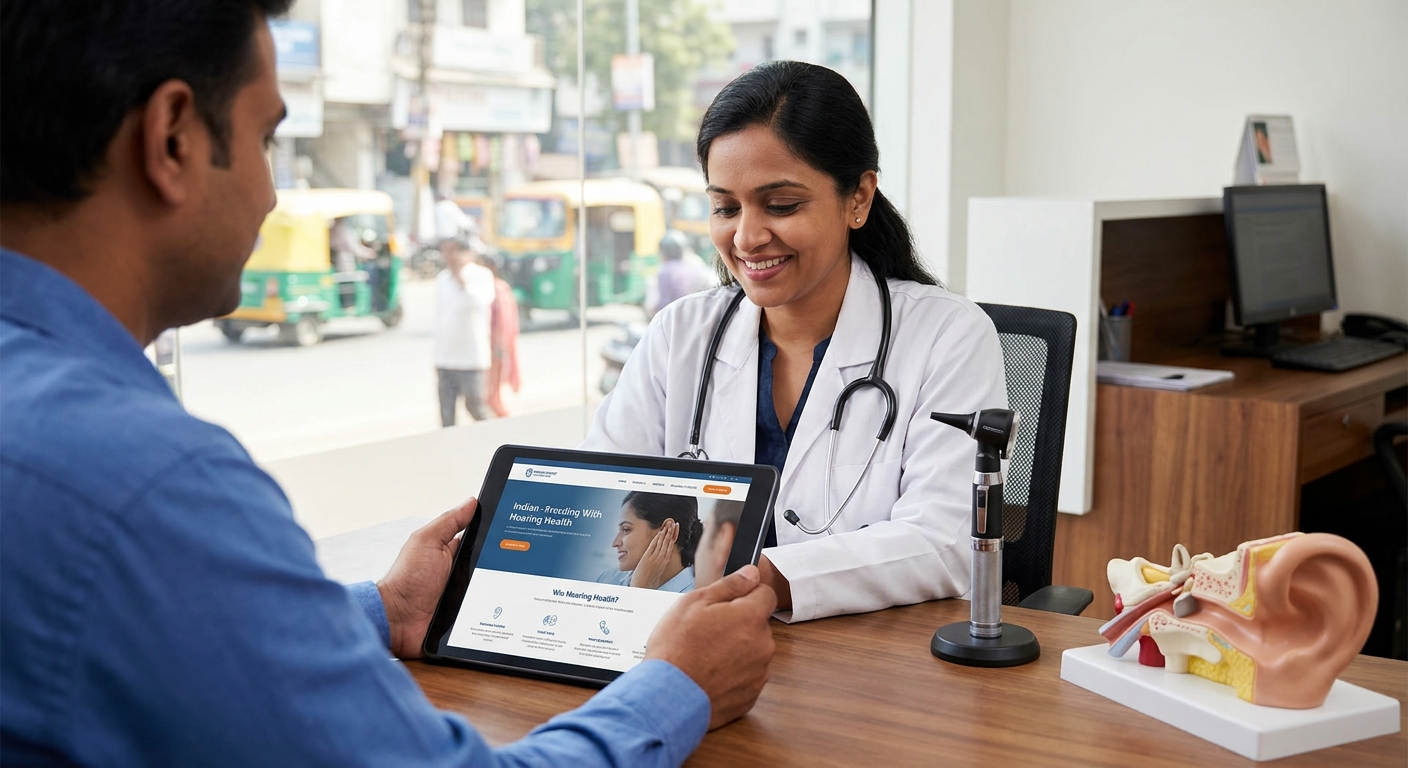
ENT clinics in India compete for patients who Google their symptoms before they book anything, and most clinic websites still read like a 2016 brochure. This guide breaks down what actually moves the needle for ENT and multi-specialty hospital marketing in 2026, and where clinics waste money.
- Local SEO and a review score above 4.5 stars decide which ENT clinic gets the click in 2026 — prioritize Google Business Profile first.
- PPC works for ENT clinics only when landing pages match the exact procedure searched, not a generic homepage.
- Marketing automation for post-surgery follow-ups (tonsillectomy, septoplasty, hearing aid fittings) recovers patients who'd otherwise churn to a competitor.
- Skip broad brand-awareness social campaigns for single-location ENT clinics — the budget is better spent on local search intent.
Why this matters
An ENT patient rarely books the first result. They check reviews, compare wait times, and look for a doctor profile with real credentials before calling. Digital marketing for ENT clinics in 2026 is less about being visible and more about being convincing at the exact moment someone searches "ENT specialist near me" or "best ENT doctor for sinus surgery in [city]."
Multi-location clinics face a different problem: each branch competes with itself in search results if the local SEO setup is sloppy. Get that wrong and a hospital chain with five branches ranks worse than a single independent clinic. Digital marketing services for hospitals and clinics need to be built around this reality, not a generic template borrowed from retail or e-commerce.
Who this is for
This guide is built for ENT clinic owners, hospital marketing heads, and multi-location healthcare groups in India that run one to fifteen branches and depend on a mix of walk-ins, referrals, and search traffic. If your clinic sees a steady stream of sinus, hearing, and throat cases but your online booking numbers don't reflect your in-clinic footfall, the gap is almost always in local visibility, conversion-ready web pages, or a follow-up system that's non-existent.
It's also for hospitals with an ENT department competing against dedicated specialty clinics that outrank them on "ENT doctor near me" simply because their Google Business Profile is more complete.
What to look for in digital marketing for ENT clinics
Local SEO and Google Business Profile depth
ENT searches are hyperlocal — "sinus specialist [city]", "hearing test near me" — and Google ranks the profile with more reviews, more photos, and more consistent NAP (name, address, phone) data across directories. A Google Business Profile with 50+ reviews and updated weekly with new photos routinely outranks a clinic with a better website but a stale listing.
A website built for appointment booking, not brochureware
Most ENT clinic websites list services and stop there. A conversion-ready site puts a click-to-call button and an appointment form above the fold on every service page — sinus, hearing, snoring, pediatric ENT — because each of those pages attracts a different search intent and a different patient.
PPC that targets procedure-level intent
Generic "ENT clinic" ads waste budget. Campaigns built around specific procedures — septoplasty, tonsillectomy, hearing aid fitting — convert at a far higher rate because the landing page matches exactly what the patient typed into the search bar.
Reputation and review management
A single 1-star review with no clinic response sits at the top of a Google Business Profile for months and quietly repels new patients. Clinics that respond to every review within 24 hours, good or bad, see stronger trust signals and better local rankings over time.
Marketing automation for patient follow-up
Post-surgery patients and hearing-aid buyers need scheduled check-ins. Automated SMS or WhatsApp reminders for follow-up visits, medication refills, and annual hearing tests keep patients from drifting to whichever clinic remembers to call them back.
Content that answers real patient questions
Content built around actual search queries — "is septoplasty painful," "how long does a hearing aid last" — builds trust before the first appointment and gives Google (and AI answer engines) something specific to cite.
Get a marketing plan built for your clinic
See what a data-driven strategy looks like for your specialty and location.
Core channels to prioritize in 2026
Google Business Profile — the non-negotiable
This is the first thing a patient sees before they ever open your website. A profile with complete service categories, 40+ photos, and consistent review responses drives more calls than most paid campaigns for single-location clinics. Verdict: Priority — build this before anything else.
Local landing pages for each procedure
One page per procedure, per location, with location-specific schema markup, beats a single generic "Services" page every time a multi-branch clinic tries to rank in more than one city. Verdict: Priority for any clinic with 3+ locations.
PPC for high-intent procedure searches
PPC works when it's narrow. A campaign targeting "tonsillectomy cost [city]" with a matching landing page converts; a campaign targeting "ENT clinic" broadly burns budget on tire-kickers. Verdict: Test with a tight procedure-level campaign before scaling spend.
Broad social brand-awareness campaigns
Follower counts and generic awareness posts rarely translate into booked appointments for a single-location ENT clinic — the intent isn't there. Multi-specialty hospitals with a broader service mix get more mileage from social, but a standalone ENT clinic usually doesn't. Verdict: Skip for single-location clinics, reconsider only for multi-specialty groups.
Marketing automation for follow-up and recall
A patient who had a septoplasty in January needs a check-in call in March, not a generic newsletter. Automated recall sequences tied to procedure type keep patients in the clinic's ecosystem instead of losing them to a competitor after the surgery is done. For a fuller breakdown of what attracts and retains patients across specialties, see this guide on attracting more patients with digital marketing. Verdict: Priority — the ROI shows up in retention, not just new bookings.
What to avoid
- Generic templated websites that don't separate ENT sub-specialties into their own pages — Google can't rank what it can't distinguish.
- Buying followers or fake reviews — a spike in reviews without matching foot traffic is an easy pattern for Google's spam systems to flag in 2026, and it can tank an otherwise healthy profile.
- One-size-fits-all PPC campaigns across every branch of a multi-location clinic — each location needs its own geo-targeted campaign, or the ad budget cannibalizes itself across branches competing for the same keywords.
Verdict comparison
| Channel | Best for | Setup effort | 2026 Verdict |
|---|---|---|---|
| Google Business Profile optimization | All ENT clinics | Low | Priority |
| Procedure-level local landing pages | Multi-location clinics | Medium | Priority |
| PPC on procedure keywords | Clinics wanting fast lead volume | Medium | Test |
| Broad social brand campaigns | Multi-specialty hospitals | High | Skip (single-location) |
| Automated patient follow-up | Post-surgical and hearing-aid patients | Medium | Priority |
FAQ
What's the best digital marketing strategy for ENT clinics in 2026?
Local SEO paired with a complete Google Business Profile is the highest-leverage strategy for ENT clinics in 2026. PPC on procedure-specific keywords and automated patient follow-up add measurable gains once the local foundation is solid.
Is SEO better than PPC for an ENT clinic?
SEO builds compounding, long-term visibility while PPC delivers faster but temporary lead volume. Most ENT clinics need both — SEO for sustained local rankings, PPC for procedure-specific searches with immediate intent.
How important are Google reviews for an ENT clinic?
Google reviews are one of the strongest local ranking and trust signals for ENT clinics in 2026. A profile with 50 or more recent reviews and fast responses typically outperforms a competitor with a thinner review history, even with a similar website.
Do multi-location ENT clinics need separate marketing for each branch?
Yes — each branch needs its own Google Business Profile, local landing page, and geo-targeted PPC campaign. Running one generic campaign across multiple locations causes branches to compete against each other for the same keywords.
Does content marketing work for ENT clinics?
Content that answers specific patient questions like recovery timelines or procedure risks builds trust before booking and gives AI search tools and Google specific material to cite. Generic blog posts without real patient questions rarely move rankings.
How long does it take to see results from ENT clinic SEO?
Most ENT clinics see measurable local ranking movement within 90 days of a proper Google Business Profile and on-page SEO overhaul. Competitive metro markets can take longer depending on how established competing clinics already are.
Should ENT clinics use marketing automation?
Yes, particularly for post-surgical and hearing-aid patients who need scheduled follow-ups. Automated WhatsApp or SMS recall sequences reduce patient drop-off and keep repeat visits inside the same clinic.
One last thing
The clinics winning local search in 2026 aren't the ones spending the most on ads — they're the ones that answer every Google review within a day and keep their Business Profile updated weekly with real photos, not stock images. That single habit does more for ENT clinic visibility than most paid campaigns combined.